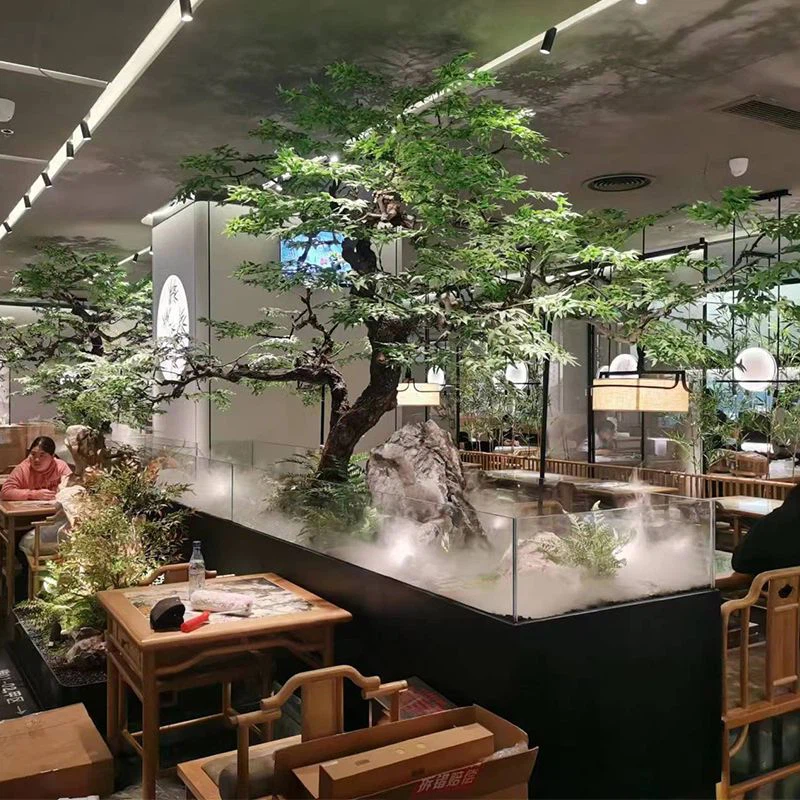
Your Leading Haihong Enterprise Supplier


"Haihong Enterprise" was founded in 2004, a large enterprise of landscape which set the planning, design, development, production, sales, installation and service as a whole(we have our own right to export), there are: "Shanghai Yongzhou Haihong Arts&Crafts Co., Ltd. ", "Guangzhou Haihong Landscape Engineering Co., Ltd. ", " Guangzhou Baiyun District Haihong Artificial Plant factory ", "Yongzhou Haihong Artificial Plant factory ", "HongKong Haihong Arts&Crafts Co., Ltd. "etc under Haihong Enterprise.

Haihong Enterprise has an excellent design team, the market information is our development foundation, to consider the views of customers seriously, we organize field trips to domestic and foreign large rain forest region, and constantly develop good and inexpensive selling products. Currently,our market ranked at the top of the industry, has an record of more than 3,000 impressive project cases.

In the domestic, there are Chinese World Expo Pavilion and China Pavilion, China Guangzhou Asian Games, Shanghai Disneyland, The Happy Valley, Hengda Real Estate Group, the WTO Real Estate Group, the new world of shopping malls, Asia's largest airport in Guangzhou-Baiyun International Airport, Shanghai Pudong International Airport, the Sheraton Hotel Group, Howard Johnson International Hotel Group, the world's largest single building 2013 global "Fortune" Forum, the world's largest single building-Chengdu Global Center, Dalian Xiangzhou Hot Springs Park Water Park and and Xi 'an water rubik's cube.

In the world, there are African Union conference center , the world's largest shopping mall-Dubai Mall, the largest shopping mall in India SHREE BALAJI AGORA MALL, the world's largest theme park in Dubai-the city of Arabia, ,Kobe seafront waterpark, Vietnam's largest water park, South Korea Gyeongju waterpark, Korea Pyongyang 100th anniversary of the museum and the Australian seaside resort and a series of artificial landscape project.


Why Choose Us
 
01/

High quality
Our products are manufactured or executed to very high standards, using the finest materials and manufacturing processes.

02/

Competitive Price
We offering a higher-quality product or service at an equivalent price. As a result we have a growing and loyal customer base.

03/

Rich experience
Our company has many years of production work experience. The concept of customer-oriented and win-win cooperation makes the company more mature and stronger.

04/

Global shipping
Our products support global shipping and the logistics system is complete, so our customers are all over the world.

05/

After-sale service
Professional and thoughtful after -sales team, let you worry about us after -sales Intimate service, strong after -sales team support.

06/

Advanced equipment
A machine, tool or instrument designed with advanced technology and functionality to perform highly specific tasks with greater precision, efficiency and reliability.

Artificial Janpanese Maple Tree


What is Artificial Bonsai Trees

Bonsai is the ancient Japanese art of forming miniature, artistic tree shapes from branches, seedlings, or small tree species. A large part of their appeal is the time, attention, and creativity needed to shape your Bonsai into the form you prefer. The lifespan of a Bonsai Tree is often the same as their parent tree, which can be up to 100 – or even 500 – years!


Benefits of Artificial Bonsai Trees
Artificial Janpanese Maple Tree

Low maintenance

One of the most significant advantages of artificial bonsai trees is that they require very little maintenance. Unlike living bonsai trees that need to be watered, trimmed, and fertilized regularly, artificial bonsai trees can be left alone for extended periods. This makes them ideal for people who want to enjoy the beauty of bonsai trees without the hassle of caring for them.

Artificial Janpanese Red Maple Tree

Durable

Another benefit of artificial bonsai trees is their durability. Real bonsai trees are delicate and can easily be damaged by pests, disease, or environmental factors. On the other hand, artificial bonsai trees are made from high-quality materials that are designed to withstand wear and tear. They are also resistant to fading, so you can enjoy your artificial bonsai tree's beauty for years to come.

Faux WEEPING WILLOW TREE

Versatile

Artificial bonsai trees come in many styles and sizes, making them versatile for a range of home decor themes. Whether you prefer a traditional Japanese-style garden or a modern minimalist interior, there is an artificial bonsai tree to suit your taste.

Artificial Black Olive Trees For Hall

Easy to clean

Cleaning real bonsai trees can be tricky, as the plants are fragile and can easily be damaged during the cleaning process. Artificial bonsai trees, on the other hand, are easy to clean and maintain. You can wipe them down with a damp cloth or use a soft brush to remove dust and debris.


Types of Artificial Bonsai Trees


Ficus bonsai tree
The Ficus Bonsai Tree is one of the most popular choices of artificial bonsai trees for home decor. It is a great way to add a touch of nature to your living room, bedroom, or workspace. The tree is designed to look like a miniature version of a real Ficus tree with intricately crafted leaves and branches. The design and detailing make it difficult to distinguish between a real and an artificial tree.

Juniper bonsai tree
The Juniper Bonsai Tree is another popular choice of artificial bonsai trees for home decor. It is known for its lush green foliage and delicate branches that give it an elegant and sophisticated appearance. The tree is designed to mimic the natural growth pattern of a real Juniper tree, making it an excellent addition to any space.

Pine bonsai tree
The Pine Bonsai Tree is a classic design that has been around for centuries. Its unique shape and style make it a perfect addition to any traditional or modern home decor. The tree is designed to look like a miniature version of a real Pine tree with its beautifully crafted needles and branches.

Cherry blossom bonsai tree
The Cherry Blossom Bonsai Tree is the perfect addition to any Japanese-themed home decor. The tree is designed to mimic the beauty of cherry blossoms, which are a symbol of spring in Japan. The tree comes with delicate pink flowers that are made from high-quality silk, giving it a realistic and elegant appearance.

Maple bonsai tree
The Maple Bonsai Tree is a popular choice of artificial bonsai trees for fall-themed home decor. The tree is designed to mimic the natural growth pattern of a real Maple tree during the fall season. It comes with intricately crafted leaves that resemble the changing colors of fall, making it a great addition to any space.

Jade bonsai tree
The Jade Bonsai Tree is a great addition to any minimalist home decor. The tree is designed to look like a miniature version of a real Jade plant with its thick, oval-shaped leaves. Its simple yet elegant appearance makes it a great addition to any space.


Application of Artificial Bonsai Trees

Office, Home decor, living room, bedroom,dining room,kitchen,study decoration, Bookshelf decorative ornaments, Windowsill, desk, window, hotel, wedding, party, bar, dressing table,washroom,etc.

 
Material of Artificial Bonsai Trees

Nylon, polyester and other synthetic materials are usually used to make artificial bonsai tree styles, and other artificial trees as well.


Process of Artificial Bonsai Trees


Purchase a bonsai pot to put your artificial bonsai tree in. Bonsai pots are shallow containers that are typically made of ceramic. A genuine bonsai pot will make your artificial bonsai appear more genuine.

Find or buy a piece of wood to use for the base of your artificial bonsai tree. You may purchase one that is already carved with natural curves and appeal. If you choose to do your own carving, you can customize the base of your artificial bonsai tree to appear however you like. Remember that it must have branches that extend out with a flat base on the top in order to hold the artificial foliage.

Gather up a collection of earth-toned, decorative rocks. You can get these from the great outdoors or simply purchase these at an art supply shop. Many bonsais have a decorative rock filling on top of the soil in the bonsai pot. This rock filler adds to the attractiveness of the overall appearance. This will also help your artificial bonsai be sturdier and long lasting since a clear epoxy glaze can be applied to the rock base.

Place the wooden tree base in the bonsai pot full of the decorative rocks. Neaten the rocks so they appear as you prefer them to. Apply the epoxy to the rock base inside of the pot. Let this set and dry overnight.

Choose an artificial plant or flowering plant from your local crafts store. Since bonsai are made from hundreds of different types of plants and trees, you can choose just about anything you want to for your artificial bonsai.

Use a strong, all-purpose crafting glue to apply the foliage and flowers, as you choose, to the top base of the bonsai branches. Use copper bonsai wire to wrap around the foliage and the wooden branches and base to secure the top portion of the bonsai tree. This will hold it all together while the glue dries and can even be left on if need be since many natural bonsai trees have this wiring for bonsai training of branches. It may even add to the genuine appearance.


How to Maintain Artificial Bonsai Trees


1. Keep the tree clean: Use a soft cloth to wipe the leaves and branches of your bonsai tree regularly. This will remove dust and dirt that can accumulate over time.

2. Avoid direct sunlight: Artificial bonsai trees can fade in direct sunlight, so it's essential to place them in an area with indirect light.

 
03
 

Keep the tree hydrated

Some artificial bonsai trees come with a plastic tray filled with rocks that can hold water. Make sure to keep the tray filled with water to provide humidity to the tree.See More: How to Choose the Best Plastic Tray for Your Needs

 
04
 

Prune the tree

To maintain the shape of your bonsai tree, use scissors to trim any stray branches or leaves.

 
05
 

Store the tree properly

When not in use, store your artificial bonsai tree in a cool, dry place to prevent damage.

Artificial Black Olive Trees For Hall


Artificial Black Olive Trees For Hall


The Origin of Bonsai

Although the word ‘Bon-sai’ is Japanese, the art it describes originated in the Chinese empire. By the year 700 AD the Chinese had started the art of ‘pun-sai’ using special techniques to grow dwarf trees in containers.

Originally only the elite of the society practiced pun-tsai with native-collected specimens and the trees where spread throughout China as luxurious gifts. During the Kamakura period, the period in which Japan adopted most of China’s cultural trademarks, the art of growing trees in containers was introduced into Japan. The Japanese developed Bonsai along certain lines due to the influence of Zen Buddhism and the fact that Japan is only 4% the size of mainland China. The range of landscape forms was thus much more limited. Many well-known techniques, styles and tools were developed in Japan from Chinese originals. Although known to a limited extent outside Asia for three centuries, only recently has Bonsai truly been spread outside its homelands.


Understanding Bonsai Tree Styles

Before diving into bonsai tree styling techniques, it’s essential to grasp the different bonsai styles that serve as a foundation for your creative vision. These time-tested styles reflect various aspects of natural tree growth, each presenting its own unique charm and character.

1

Formal upright style (chokkan)

The formal upright style embodies stability and strength, with a straight trunk and well-balanced branches. This style is prevalent among trees that grow in favourable conditions, reflecting their harmonious relationship with the natural environment.

2

Informal upright style (moyogi)

The informal upright style showcases a slightly curved trunk, often with multiple bends and twists. Despite the curvature, the tree’s apex remains above its base, creating a sense of equilibrium. This style illustrates the resilience of trees as they adapt to their surroundings.

3

Slanting style (shakan)

The slanting style features a trunk that leans away from its base at an angle, mimicking the appearance of trees that grow on a steep incline. This style exudes a sense of natural grace and elegance, as the tree reaches for sunlight and nutrients.

4

Cascade style (kengai)

The cascade style captures the tree’s struggle to grow amid challenging conditions, as the trunk reaches the pot’s edge before cascading downwards. This style reflects the perseverance of trees clinging to cliff edges or growing along rocky landscapes.


Styling Techniques and Tools


With a firm understanding of bonsai tree styles, it’s time to explore the techniques and tools employed to transform your tree into a breathtaking work of art.

Wiring
Wiring is a fundamental bonsai styling technique, allowing you to bend and manipulate the tree’s branches to achieve your desired shape or style. Copper or aluminium wire, specifically designed for bonsai trees, can be carefully wound around branches, guiding the tree’s growth while remaining conscious of the tree’s health and resilience. Remember that the wire must be periodically monitored and adjusted to prevent damage or scarring.

Pruning
Pruning is a crucial aspect of bonsai styling, involving the removal of unwanted branches or foliage to direct the tree’s growth pattern and maintain its overall shape. Precise pruning can be performed using specialised bonsai tools, such as concave cutters, pruning shears, and knob cutters, ensuring clean and accurate cuts that promote healthy growth.

Trimming
Trimming your bonsai tree is another essential step in the styling process, focused on refining the tree’s shape and density. Regularly trimming back foliage and small branches can encourage lush and balanced foliage growth, maintaining your tree’s refined appearance while keeping it healthy and vibrant.

Root pruning
At times, it may be necessary to prune your bonsai tree’s roots to maintain the tree’s overall health and encourage continued growth. Root pruning, generally conducted during repotting, involves carefully removing a portion of the tree’s roots to promote new and vigorous root development, ensuring your tree receives adequate nutrients and water absorption.


Our Factory

Currently Haihong enterprise covering a total area of over 80,000 square meters, there are more than one thousand total staffs, own the total assets over 250 million yuan, have customers from more than 100 countries and regions around the world. Haihong enterprise is mainly developed to the design, manufacturing and installation of artificial landscape and garden, professional development and production of large-scale artificial trees and decorative silk pants, made exclusively for Hotels, Malls ,Water Parks and Theme Parks,Building, Republic Space,Government, Casinos, Office, Restaurants, and Commercial projects.

productcate-1200-1200


FAQ
 

Q: What are the benefits of artificial bonsai plants?

A: Benefits Of An Artificial Bonsai Tree. If you love plants and flowers but you do not have a green thumb, perhaps an artificial Bonsai is just the thing for you. Living Bonsai trees take patience, the right kind of soil, good drainage, light and patience to shape it into the beautiful little trees you admire.

Q: What is the advantages of bonsai tree?

A: Bonsai trees can be a wonderful addition to any home or garden. Not only do they look beautiful, but they also have many hidden benefits. Bonsai trees can help to reduce stress, improve concentration, and boost mental health. For those who practice spirituality, bonsai trees can also help to foster spiritual growth.

Q: Do bonsai trees attract money?

A: In Feng Shui, the ancient Chinese art of harmonising energies in the environment, bonsai trees are believed to attract positive chi (energy) and promote balance. Placing a bonsai in specific areas of the home or workspace is thought to bring good luck, wealth, and prosperity.

Q: Are bonsai trees healthy?

A: What makes it a bonsai is the shape we give it. What make it healthy is the care we give it. If you begin with a healthy plant, and give it the kind of care appropriate for the species, it will remain healthy. Amount of light, water and fertilizer are all important to any potted plant (including one as a bonsai.)

Q: Are bonsai trees worth it?

A: Most people who own bonsai for years are willing to give them proper care, and enjoy the process of watching them grow and develop. For many of us it becomes a passion. If you're speaking of financial worth, that's usually not a concern. However, if you become very good at bonsai, they may increase in value.

Q: Why are bonsai trees so expensive?

A: This is because certain species are more rare or difficult to grow and care for, and may require more specialized knowledge and equipment. For example, some of the most expensive bonsai trees are varieties like the Japanese white pine or the Japanese black pine, which can be quite rare and difficult to cultivate.

Q: Is A bonsai tree spiritual?

A: Bonsai Tree Meaning and Symbolism
Originating in Japan and China over a millennium ago, the art of bonsai is intricately linked to promoting relaxation and balance. It also aligns with spiritual movements like Zen Buddhism, embodying the essence of natural beauty and harmony.

Q: How long do bonsai trees live?

A: Although this may seem like a long time, it's important to remember that if the roots are kept healthy, bonsai trees live for hundreds of years, so it's important you do all the proper research to ensure your bonsai tree has a healthy life.

Q: Can any tree be a bonsai?

A: Any tree species can be used to grow a Bonsai from. This of course includes fruit trees! Bonsai are kept miniature by applying techniques like pruning, wiring and repotting. Over the course of several years the leaves slowly reduce in size, which is crucial for the tree to appear natural.

Q: What is the 1000 year old bonsai tree

A: Ficus Retusa Linn
The oldest known bonsai is the Ficus Retusa Linn, found in the Crespi Bonsai Museum in Italy. It is estimated to be over 1000 years old. The founder of the Crespi Museum, Luigi Crespi, tried to get ownership of this bonsai tree for ten years, until he finally succeeded in 1986.

Q: Can you save a dead bonsai tree?

A: If the roots have dried up completely you won't be able to save the tree. However, If the roots aren't completely dry yet, you can rescue the tree by watering it properly and following the appropriate care routine.

Q: Are bonsai trees male or female?

A: Holvila provides clues for determining your bonsai's gender. Some attributes that can help you along the way is that the curves, grace, smooth bark and sparse branches is considered feminine. The corresponding masculine traits are strength, old bark, deadwood, thick trunk and dense branches.

Q: How big can a bonsai tree get?

A: Bonsai trees come in a large variety of sizes; fully grown trees can be anywhere from as small as 6 inches to up to 3 feet tall, depending on the tree species.

Q: What is the most lucky bonsai tree?

A: Miniature Jade Tree Bonsai – The Tree of Luck & Prosperity. The miniature Jade tree (Portulacaria afra) is a beautiful and very easy bonsai to care for, with excellent proportions and minimal watering requirements. It's fairly neat and compact when growing and is ideal for beginners and children to care for.

Q: Should I submerge my bonsai tree?

A: Immersion
The level of water should be just above the surface of the soil. Leave the bonsai submerged for five minutes until the bubbles stop. We will dip bonsai in a container with water for five minutes, until we no longer see air bubbles. The water level must exceed the surface of the soil.

Q: Do bonsai need direct sunlight?

A: Location: Bonsai need direct sunlight, from which they make their food. A lack of direct sun will damage them, causing weak foliage and other problems. They like to receive 5-6 hours of sunlight daily, whether inside or outside.

Q: Do bonsai trees bloom?

A: The best know example of flowering Bonsai trees is the Azalea, a very common tree species used in Bonsai. The flowers can be pink, red or even purple. The bougainvillea and the Wisteria are also stunning examples of flowering Bonsai. We show these below in the top 10, but we also have one for Bonsai fruit trees!

Q: What is a tiny bonsai tree called?

A: Bonsai is known for its small size, but the effort to miniaturize trees is sometimes taken to the extreme. The results are tiny little trees (called Mame Bonsai, or Mini Bonsai).

Q: What does an unhealthy bonsai tree look like?

A: Here are some sign of an unhealthy bonsai tree. Yellow leaves indicate your plant is not getting enough sunlight and may be turning slightly brown around the edges (though this is a sign of many plant problems).

Q: Why are bonsai trees so hard to take care of?

A: Bonsai trees need a little extra care than regular house plants. They are grown in small pots so have less available nutrients and water than regular house plants. Also, as tropical and subtropical trees, indoor bonsai need steady temperatures, along with plenty of light and humidity.

We're well-known as one of the leading artificial tree stumps manufacturers and suppliers in China for our quality products and customized service. Please feel free to buy bulk artificial tree stumps made in China here from our factory.