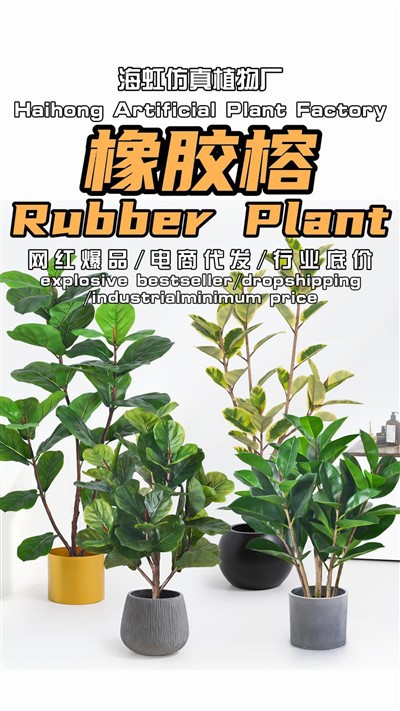
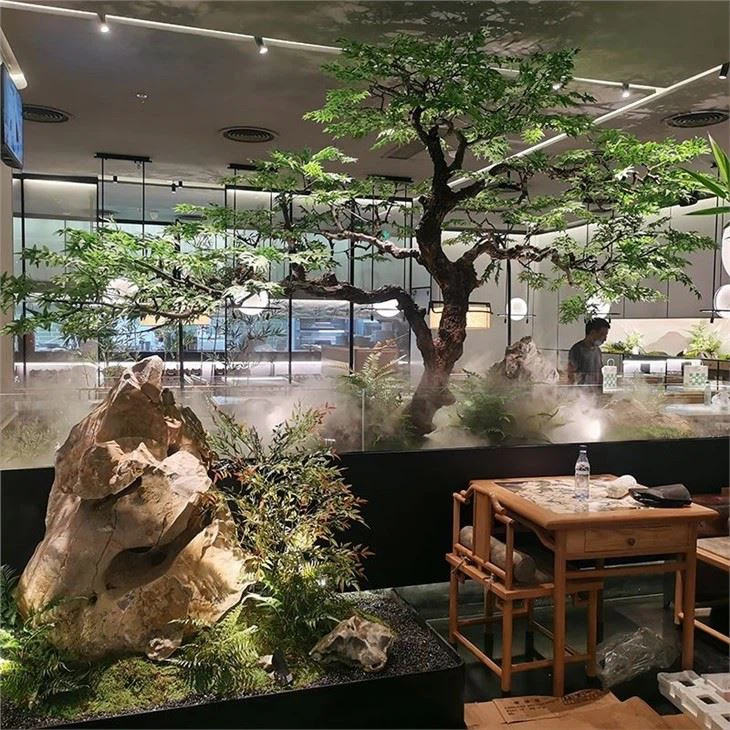
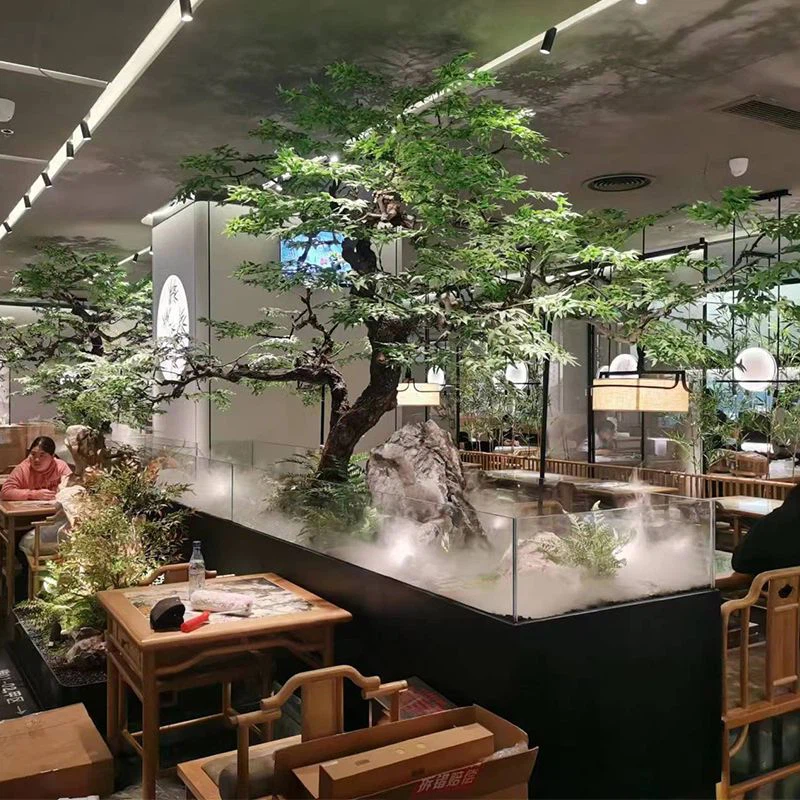
Your Leading Haihong Enterprise Supplier


"Haihong Enterprise" was founded in 2004, a large enterprise of landscape which set the planning, design, development, production, sales, installation and service as a whole(we have our own right to export), there are: "Shanghai Yongzhou Haihong Arts&Crafts Co., Ltd. ", "Guangzhou Haihong Landscape Engineering Co., Ltd. ", " Guangzhou Baiyun District Haihong Artificial Plant factory ", "Yongzhou Haihong Artificial Plant factory ", "HongKong Haihong Arts&Crafts Co., Ltd. "etc under Haihong Enterprise.

Haihong Enterprise has an excellent design team, the market information is our development foundation, to consider the views of customers seriously, we organize field trips to domestic and foreign large rain forest region, and constantly develop good and inexpensive selling products. Currently,our market ranked at the top of the industry, has an record of more than 3,000 impressive project cases.

In the domestic, there are Chinese World Expo Pavilion and China Pavilion, China Guangzhou Asian Games, Shanghai Disneyland, The Happy Valley, Hengda Real Estate Group, the WTO Real Estate Group, the new world of shopping malls, Asia's largest airport in Guangzhou-Baiyun International Airport, Shanghai Pudong International Airport, the Sheraton Hotel Group, Howard Johnson International Hotel Group, the world's largest single building 2013 global "Fortune" Forum, the world's largest single building-Chengdu Global Center, Dalian Xiangzhou Hot Springs Park Water Park and and Xi 'an water rubik's cube.

In the world, there are African Union conference center , the world's largest shopping mall-Dubai Mall, the largest shopping mall in India SHREE BALAJI AGORA MALL, the world's largest theme park in Dubai-the city of Arabia, ,Kobe seafront waterpark, Vietnam's largest water park, South Korea Gyeongju waterpark, Korea Pyongyang 100th anniversary of the museum and the Australian seaside resort and a series of artificial landscape project.


Why Choose Us
 
01/

High quality
Our products are manufactured or executed to very high standards, using the finest materials and manufacturing processes.

02/

Competitive Price
We offering a higher-quality product or service at an equivalent price. As a result we have a growing and loyal customer base.

03/

Rich experience
Our company has many years of production work experience. The concept of customer-oriented and win-win cooperation makes the company more mature and stronger.

04/

Global shipping
Our products support global shipping and the logistics system is complete, so our customers are all over the world.

05/

After-sale service
Professional and thoughtful after -sales team, let you worry about us after -sales Intimate service, strong after -sales team support.

06/

Advanced equipment
A machine, tool or instrument designed with advanced technology and functionality to perform highly specific tasks with greater precision, efficiency and reliability.

First 1234567 Last 1/20

What is Artificial Trees


Artificial trees are a variant of DAC (direct air capture). They collect CO2 but still need somewhere to put it. It is low risk as it’s mass-producible, but a slow win, needing a solution for CO2 disposal.


Benefits of Artificial Trees


1.Cost-effective
Artificial trees can be reused for years to come, making the initial investment a tremendous money saver in the long run especially when you consider the maintenance cost some types of trees demand.

2.Long-lasting
Real plants deteriorate over time, especially if placed in less-than-ideal conditions, often turning into a brown, unsightly mess for you or the cleaning and maintenance staff to clean. However, no matter how long you leave an artificial tree standing, it will maintain its appearance and remain bright and fresh-looking.

 
03
 

Safe

Safety should be a primary concern when purchasing anything for a home, and though artificial plants don’t rank very high on the “fire hazard” list, caution is advised. Real trees can become a fire hazard when they dry out, and the difference between a dead houseplant and a fiery element usually lies in a small series of unfortunate events. Luckily, modern artificial trees are made of flame retardant materials — they melt but do not burst into flames.

 
04
 

Convenient

Bamboo trees require clean containers, filtered out water, plenty of light, and maintained adequate drainage, all of which is a mission impossible for those with busy lives. An artificial bamboo tree definitely makes more sense. Once set up, it requires no maintenance, watering, and cleaning, apart from occasional dusting when the circumstances demand.

 
05
 

Custom appearance

Being able to customise your plant’s appearance does wonders for your home decor. For example, you can find a tree with more extravagant colors and lights, that better reflect your personality.

Artificial Janpanese Maple Tree


Types of Artificial Trees
 

Types of branches: Artificial trees come with two types of branches—hinged or hook-in. Hinged fake trees, which consist of just a few parts, have permanently affixed branches and are generally easier to set up. Hook-in branches are individually hooked into a specific spot on a central tree pole. These fake trees take much more time to put together and cannot be pre-lit, but they also tend to be less expensive.


Types of material: Fake trees are made using one of two types of plastic: PVC or PE. The main difference in materials is in how the trees look. PVC needles are attached to the fake tree branches using wires. PE fake trees are fabricated, so both the needles and the branches better resemble those of a real tree. Branch tips may also be sculpted, which means they better replicate the look of a real evergreen.


Tinsel, feather, and other artificial christmas trees: While many fake trees for Christmas are designed to resemble real evergreens, some of them are designed to fill a different decorating need. Tinsel and feather trees are two common examples; these are typically white, silver, or gold. While many are often used as tabletop trees, tinsel trees are available in full-size as well.


Artificial Janpanese Maple Tree


Components of Artificial Trees

Hook on construction: This is where each branch is colour coded and the branches are hooked on to the corresponding colour coded receptor on the main stem.The advantages of Hook on branches are, the trees are more full and generally go all the way to the ground, no gaps at the bottom .

Hinged construction:In this case the tree will normally come in three parts, head,middle and bottom , the branches are already attached to the stem.The three parts are assembled ,the branches need only be fluffed .The advantage is the tree is quicker to assemble. The disadvantage the trees are not as full and do not go all the way to the ground.

Tip count : This is the number of tips on an artificial tree .The greater the number of tips the more full the tree.


Material of Artificial Trees


1.Metal: Many artificial trees are constructed using a metal framework as the main support structure. Typically, steel or aluminum is used due to their strength and durability.

2.PVC (Polyvinyl Chloride): PVC is a synthetic plastic material that is often used to create the foliage or branches of artificial trees. It is lightweight, flexible, and can be molded into various shapes resembling natural tree branches.

 
03
 

PE (Polyethylene)

Another popular material for artificial tree foliage is polyethylene. PE branches are designed to look more realistic and have a soft texture. They are often used in high-quality artificial trees to mimic the appearance of real foliage.

 
04
 

Fabric

Some artificial trees feature fabric leaves or flowers for a specific decorative effect. These fabrics can be polyester, silk, or other synthetic materials.

 
05
 

Other additions

Depending on the design, additional materials like foam, plastic, or even real wood might be used to enhance the tree's appearance or provide stability.

Artificial Pine Tree


Process of Artificial Trees


Choose your location
Pick a location that is big enough for the diameter of the bottom of the tree. You’ll want to be sure the branches don’t hit the walls and won’t impede guests from walking by. Vacuum the area in preparation for the set up. Double check that the outlet in that location is operational and attach a light timer at this point, if desired.

Open the box and remove all parts
Carefully open the box using a box cutter or knife without cutting too deep. You don’t want to accidentally cut the branches or lights. Remove all of the pieces included in the box, including the instructions and extra lights, if it’s a pre-lit tree. Keep all the pieces organized so as not to lose anything that may be needed later.

Read included instructions and follow them precisely
Every company is different, but almost every manufacturer includes detailed instructions on how to assemble an artificial Christmas tree from their company.

Begin with the stand
Check the instructions for how to assemble the stand for an artificial Christmas tree. Put the stand together completely and place it where you want the “trunk” to be.

Insert each section
Take the largest section, which will be the bottom unless you purchased and upside down tree, and place the pole gently into the base. Make sure the pole has been securely inserted into the base. Refer to the provided instructions, as some trees have snaps or other security measures to provide extra stability. Insert each subsequent section on top of the other in the same manner, fluffing and separating the branches on each section as you go.


How to Maintain Artificial Trees
 
 
Light dirt accumulation

Using a feather duster, remove all loose dust from your artificial plants and trees. Make sure to thoroughly clean each leaf, the center stock, and all branches.

Spray a coating of non-aerosol silk cleaner all over your silk plants and trees. Each brand has specific instructions, so be sure to read the label thoroughly before you begin.

 
Moderate dirt accumulation

Using a feather duster, remove all loose dust from your faux plants and artificial trees.

Treat your silk plants and trees with a combination of warm water and soap. A flakey soap, like Ivory soap, works best. Mix one teaspoon of soap with two gallons of water and apply with a spray bottle. Spray your faux plants and trees all over with this mixture. Then, treat your silk plants and trees with one to three applications of non-aerosol silk cleaner as needed. Allow the leaves to dry between applications.

 
Heavy dirt accumulation

Using a feather duster, remove all loose dust from your artificial plants and trees

Using the same soapy mixture above, treat your silk plants and trees twice with a spray bottle. Hand-wipe the leaves after application if necessary.

Treat your artificial greenery one to three times with non-aerosol silk cleaner. If your plants require more than one application, allow them to dry completely between treatments.


How to Choose Artificial Trees


Consider your space
Measure the area you plan to put the tree. The top of the tree should be six inches from the ceiling if you aim for the tallest tree your room will allow. Otherwise, the great thing about artificial is you can get a variety of smaller sizes like tabletop varieties or slim-width floor trees, perfect for apartments.

Decide on lights
Pre-lit is convenient and now comes in a variety of clear, white, and multicolored options. For your convenience, choose a tree that stays lit when one bulb goes out. If you like to change your décor each year, an unlit tree may be the better, less-committed option.

Select your shape
Many artificial trees come in pencil-thin and razor-edged shapes, which are not exactly realistic. That shape might be just right for a specific look or space. Otherwise, look for the larger, fuller, organic shapes that resemble something you'd buy off a Christmas tree farm.

Get precise with color
If the site or store you are shopping at has a style that incorporates both dark and light greens and browns, that's the key to realistic tree coloring. Monotone green trees can be beautiful but may not look as natural.

Build a winter wonderland
One wonderful thing about artificial trees is the ability to mimic a cherished snowy Christmas every year—despite the weather outside. Choose a flocked tree to resemble the dusting of snow that would cover a tree found on a Christmas tree farm just after the first winter's snowfall. Flocked trees are also available in different colors, so this is an opportunity to coordinate with your existing decor and make setting up decorations in the future more effortless.

Attached elements
When selecting an artificial tree, attached components can impact how you display this tree in your home. First, the number of tips is a descriptor signifying the quality of the tree and, therefore, will affect the overall appearance. More tips generally indicate a better quality tree.

A second attachment is a faux trunk. If you were to select a tree from a Christmas tree farm, you would undoubtedly know there is a tree trunk that might be visible in particular areas. When buying an artificial tree, a trunk is an element that can add some realism to your decor but might not be the look you want to achieve.


Artificial Pine Tree


History of Artificial Trees

The first artificial Christmas trees were developed in Germany during the 19th century, though earlier examples exist. These "trees" were made using goose feathers that were dyed green. The German feather trees were one response by Germans to continued deforestation in Germany.

Developed in the 1880s, the feather trees became increasingly popular during the early part of the 20th century. The German feather trees eventually made their way to the United States where they became rather popular as well. In fact, the use of natural Christmas trees in the United States was pre-dated by a type of artificial tree. These first trees were wooden, tree-shaped pyramids lit by candles, they were developed in Bethlehem, Pennsylvania, by the German Moravian Church in 1747.


Our Factory

Currently Haihong enterprise covering a total area of over 80,000 square meters, there are more than one thousand total staffs, own the total assets over 250 million yuan, have customers from more than 100 countries and regions around the world. Haihong enterprise is mainly developed to the design, manufacturing and installation of artificial landscape and garden, professional development and production of large-scale artificial trees and decorative silk pants, made exclusively for Hotels, Malls ,Water Parks and Theme Parks,Building, Republic Space,Government, Casinos, Office, Restaurants, and Commercial projects.

productcate-1200-1200


FAQ
 

Q: What was the first artificial tree?

A: History. The first artificial Christmas trees were developed in Germany during the 19th century, though earlier examples exist. These "trees" were made using goose feathers that were dyed green.

Q: What was the first artificial tree?

A: History. The first artificial Christmas trees were developed in Germany during the 19th century, though earlier examples exist. These "trees" were made using goose feathers that were dyed green.

Q: What is the oldest artificial Christmas tree?

A: Paul Parker (UK) owns an artificial Christmas tree that has been in his family since 1886. It stands 30 cm (1 ft) tall in an ornate pot and was originally bought for his great-great Aunt Lou, possibly from Woolworths. It was bequeathed to Paul by his mother, Janet, in 2008, continuing the tradition.

Q: Who made the first artificial tree?

A: This design allowed for hanging heavier ornaments and decorations. This tree was originally attributed to the Addis Brush Company, which has been credited with the invention of this style of artificial Christmas tree.

Q: When did artificial Christmas trees start in USA?

A: Late 1800s – The first glass ornaments were introduced into the United States, again from Germany. The first ones were mostly balls, but later chains of balls, toys and figures became more common. Around 1883 – Sears, Roebuck & Company began offering the first artificial Christmas trees – 33 limbs for $.

Q: What percentage of Americans have a fake tree?

A: 77%
The holiday tradition of setting up a Christmas tree has endured centuries. But this year, 77% of Americans displaying a Christmas tree say they'll opt for an artificial one, according to a survey from the American Christmas Tree Association, an industry promotion group. The shift to fake trees has been a steady one.

Q: What is the average lifespan of an artificial Christmas tree?

A: 10 years
A 2018 Survey revealed that artificial Christmas trees are the greener choice if reused for 5 years. Most owners use their artificial tree for an average of 10 years. This gives it a more favorable effect on the environment compared to buying and disposing of a real tree every year.

Q: Which country started the tradition of putting up a Christmas tree?

A: Germany
Germany is credited with starting the Christmas tree tradition—as we now know it—by the 16th century when sources record devout Christians bringing decorated trees into their homes.

Q: What is the world's largest artificial tree?

A: The Sri Lankan Christmas tree
The Sri Lankan Christmas tree is the world's tallest artificial Christmas tree.

Q: Are fake indoor trees tacky?

A: Sometimes, a fake plant can look tacky because of tall, exposed branches. For instance, a dracaena's trunks will oftentimes shine brighter than a waxed car. Same goes for ficus, olive, and eucalyptus. However, there are many foolproof options.

Q: How long does a fake tree last?

A: If cared for properly, they can last anywhere from 10 to 20 years, said Jami Warner, executive director of the American Christmas Tree Association, an industry group that represents artificial tree makers. And since buying an artificial Christmas tree is a long-term investment, it's important to purchase one you love.

Q: What was the first artificial tree?

A: History. The first artificial Christmas trees were developed in Germany during the 19th century, though earlier examples exist. These "trees" were made using goose feathers that were dyed green.

Q: What do you put at the bottom of a fake tree?

A: Tree Skirts or Blankets
You can also use a knitted, faux fur, or velvet blanket to add texture and hide the tree base from view. Carefully wrap the blanket or bunch it up beneath the tree to cover the stand. You can also use any fabric you like, like burlap or silk, in the same way.

Q: How long do prelit artificial trees last?

A: Typically, pre-lit Christmas trees are designed to last for several holiday seasons, which can range from 3 to 10 years or more. Higher-quality trees with energy-efficient LED lights tend to have a longer lifespan compared to cheaper alternatives with incandescent lights.

Q: Who invented artificial trees?

A: In 1930, the British Addis Housewares Company created an artificial tree using brush bristles. The bristles, which were the same as the ones used for their line of toilet brushes, were dyed green. The first aluminum trees were manufactured in Chicago in 1958, with production later moving to Wisconsin.

Q: Why do they put plastic around the bottom of trees?

A: Damage from rodents, mowers and weed trimmers can be prevented by using plastic guards. A simple, yet effective, guard can be made using perforated drain tile cut in 12-inch sections and split down the side so it can be placed around the tree trunk.

Q: What are some facts about artificial trees?

A: The average family uses a fake tree for only six to nine years before throwing it away, where it will remain in a landfill indefinitely. That's a pretty hefty, long-term environmental burden. The polyvinyl chloride (PVC) used in most artificial trees has been boycotted by many environmental groups.

Q: How much should an artificial tree cost?

A: The ACTA says that 52% of consumers who buy fake trees pay $200 or less, and 27% pay between $200 to $400. But despite their potentially higher cost, artificial trees also last a very long time. Faux trees can be used from 10 to 20 years.

Q: What is a Yule tree?

A: The “Yule tree,”, or Christmas tree, is a decorated tree, usually an evergreen conifer species, such as pine, fir, cedar, juniper, or spruce. The tradition has origins with ancient civilizations in the middle east, Asia, and Europe.

Q: How long does it take for an artificial tree to decompose?

A: 500+ years
From the retailer, the customer takes the artificial Christmas tree home in a passenger vehicle. When the artificial tree's life is over, it is taken to a landfill where it takes 500+ years to decompose.

We're well-known as one of the leading artificial trees manufacturers and suppliers in China for our quality products and customized service. Please feel free to buy bulk artificial trees made in China here from our factory.